How to Visualize Financial Statements
Good statement charts are not cosmetic. They help investors see trend, composition, bridge, and flow faster than a dense table can.
A table tells you the numbers. A chart tells you the shape.
Financial statements start as tables because accounting is exact. But investors do not just need exactness. They need to see what is growing, what is shrinking, what is concentrated, what is driving change, and where cash actually goes.
That is where the right chart matters. A line chart shows trend. A stacked bar shows composition. A waterfall shows how one total turns into another. A Sankey-style view shows structure and flow. Each one answers a different question that a raw table makes unnecessarily hard.
The mistake is not using charts. The mistake is using the wrong chart for the question. Good financial visualization is not about decoration. It is about compressing complexity without losing the economic logic of the statement.
Trend
Best when the real question is direction over time.
Composition
Best when you need to see the parts inside a total.
Bridge
Best when you want to explain how a starting value becomes an ending value.
Flow
Best when the business is easier to understand as a routed system of sources and uses.
Use line charts for trend, not structure
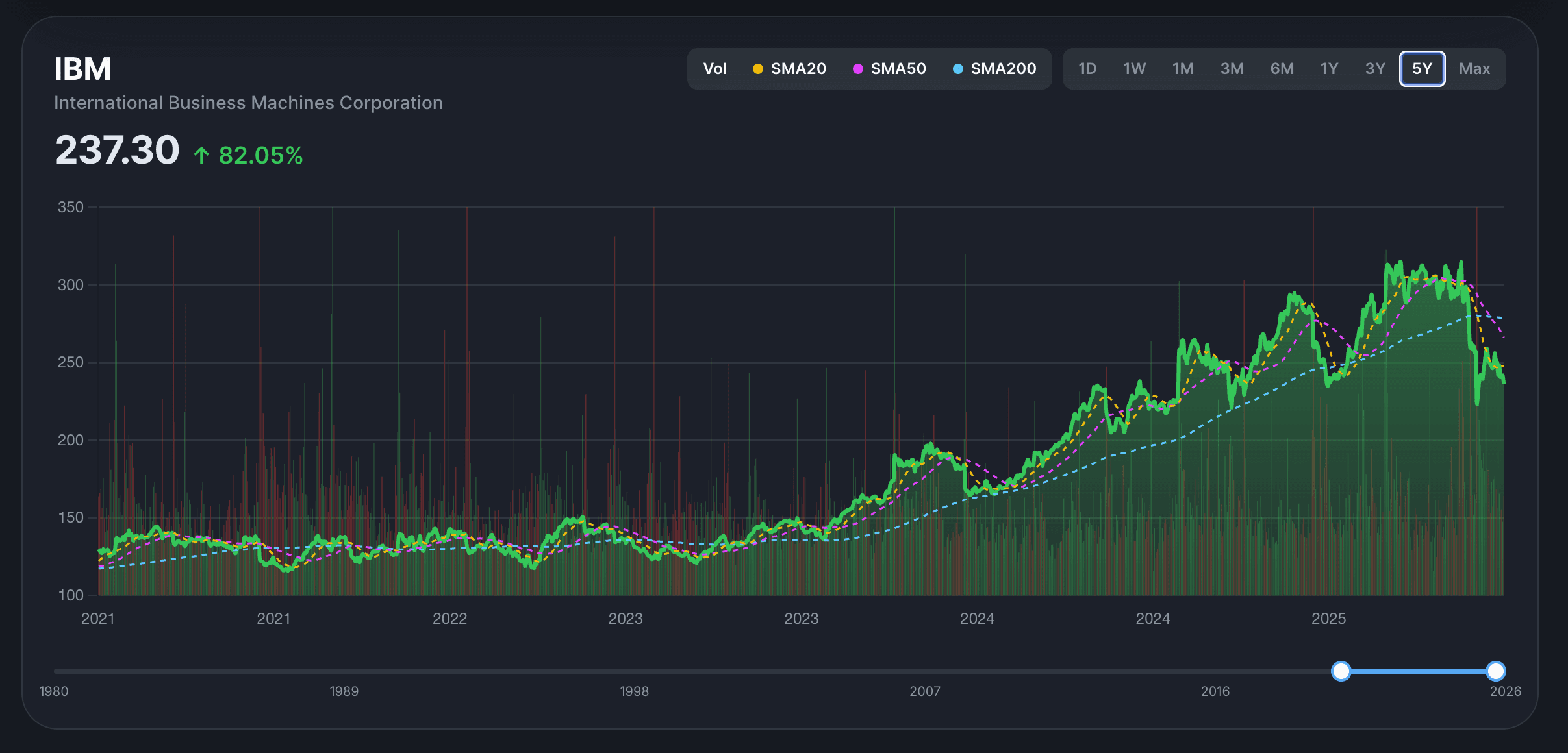
A line chart is the fastest way to answer a simple question: is the business moving up, down, or sideways over time?
That makes line charts ideal for revenue, gross margin, operating margin, free cash flow, and long-run market context. They reveal slope, volatility, acceleration, and regime change. A table can tell you that revenue went from 24 to 28 to 31 to 30. A line makes it obvious that growth accelerated and then softened.
What a line chart does not do well is explain what sits inside the total. If revenue changed because one segment exploded while another shrank, a line alone hides that.
Use stacked bars for composition, not long narratives
When the question is “what makes up this total?” a stacked bar is usually the right answer. Revenue by segment, operating expenses by function, or geographic mix are all composition problems.
A stacked bar reveals concentration quickly. If one business line is taking over the total, you see it immediately. If a segment that looks stable in aggregate is actually rotating underneath the surface, a stacked view exposes that rotation in a way a flat table does not.
The limitation is also clear: once you need to show too many periods, too many categories, or both, readability falls apart. Use stacked bars to show composition snapshots and shifts, not every possible quarter in one giant block.
- Segment concentration
- Mix shift over time
- Which categories actually drive the total
- Visual dominance of one segment
- Slow mix rotation beneath similar totals
- Whether diversification is improving or collapsing
Use waterfalls when investors need the bridge
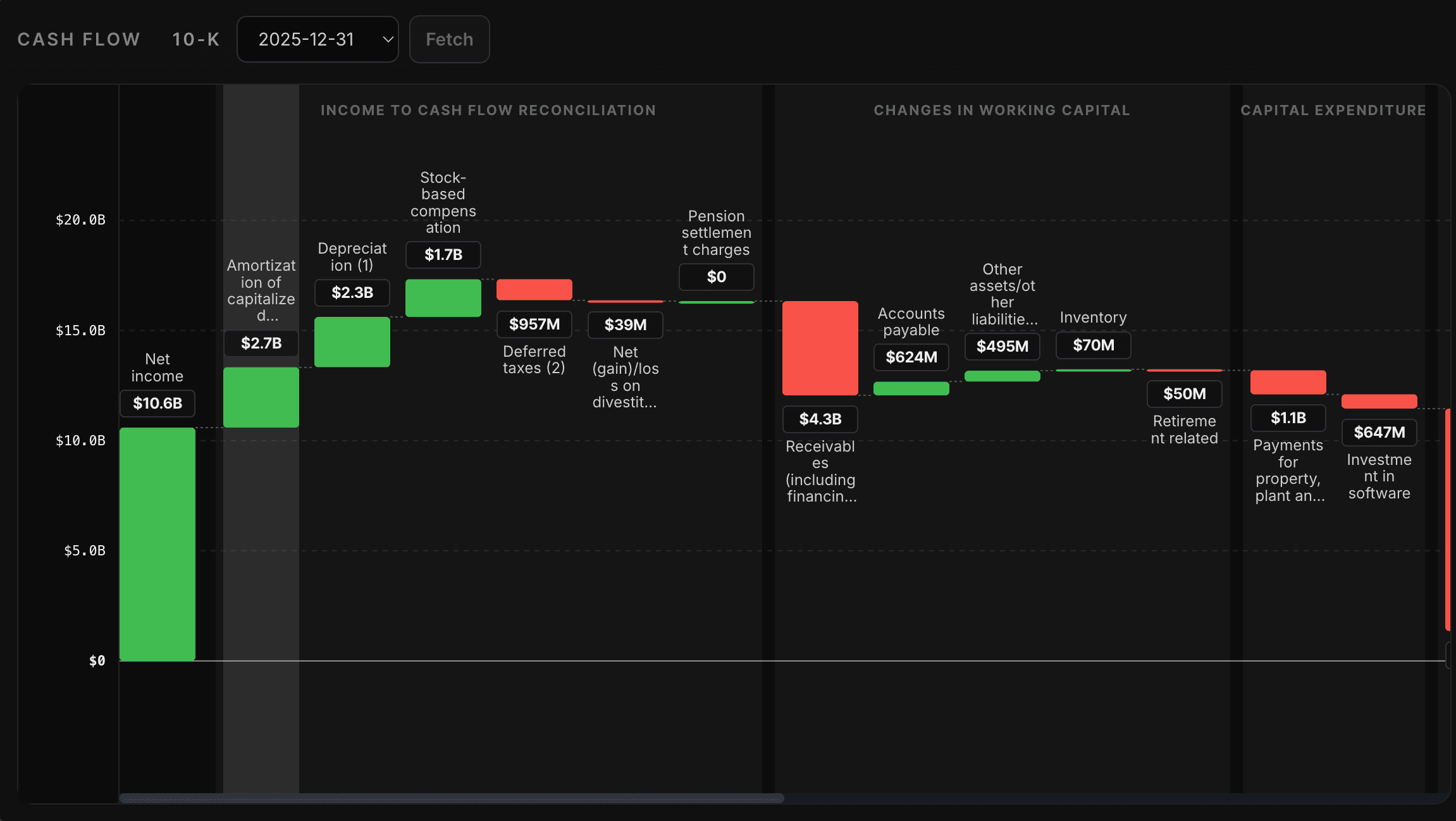
A waterfall chart is for one of the most common investor questions: how did we get from here to there?
That makes it ideal for cash flow logic. Start with net income, then bridge through depreciation, stock-based compensation, working capital, capex, and other adjustments until you arrive at operating cash flow or free cash flow. A table lists each line item, but a waterfall shows which items actually pushed the total up or down.
This is especially useful when headline earnings and cash are telling different stories. The waterfall makes the gap legible. You can see whether cash is being helped by payables, hurt by inventory, or structurally reduced by capital intensity.
Use Sankey-style views when the statement is really a flow system
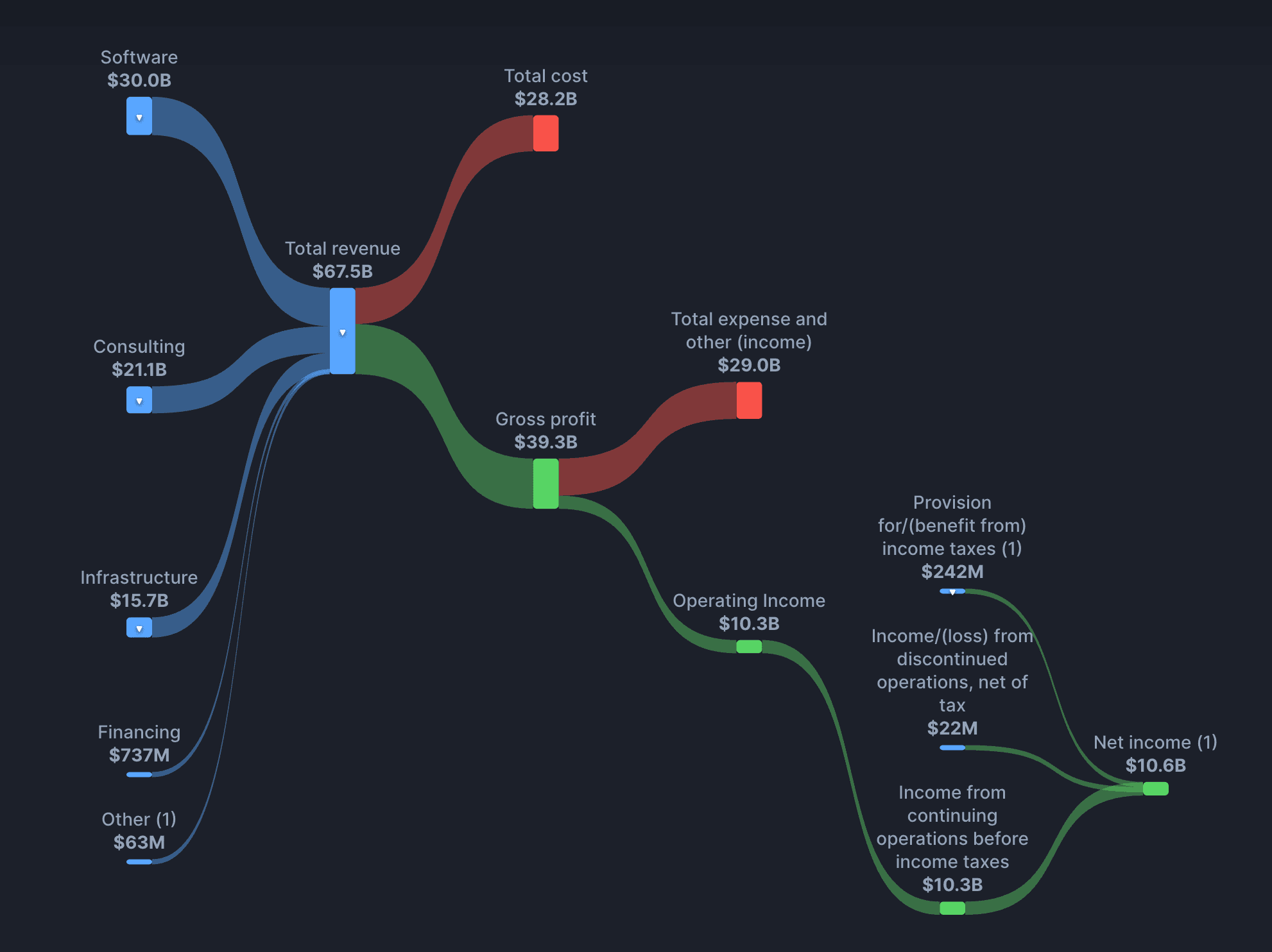
Some businesses are easier to understand as a routed flow instead of a vertical statement. Revenue comes in through segments, turns into gross profit after costs, then narrows through operating expenses into operating income and finally net income. Cash flow has the same logic: sources, uses, and residual cash.
That is where a Sankey-style view earns its keep. It preserves structure. You can see not just the size of each component, but where each component sits in the business model and how the pieces connect.
A table is excellent when you already know what you are looking for. A Sankey is better when you are trying to understand the architecture of the statement itself: which branches dominate, where losses enter, and which path from revenue to profit actually matters.
The practical chart chooser for investors
- 1.Use a line chart when the question is about trend, momentum, volatility, or regime change.
- 2.Use a stacked bar when the question is about composition, mix, or concentration.
- 3.Use a waterfall when the question is how one total bridges into another.
- 4.Use a Sankey-style chart when the question is about business structure and routed flow.
Why this is product differentiation, not polish
DeepFundamental's UI is not trying to make finance look pretty. It is trying to make the business legible. Different chart forms surface different truths: trend, concentration, bridge, and flow.
That matters because serious investors are not short on numbers. They are short on time and clean mental models. The right visualization lets them see what changed in the statement before they drown in rows of accounting detail.
See the statement, not just the table
Open a live company and switch between statement views to see trend, composition, bridges, and flow in the same filing-backed workflow.